The Community That Hugged Trees Before the World Spoke About Climate Change
- 2026-06-12 10:46:37
- Admin
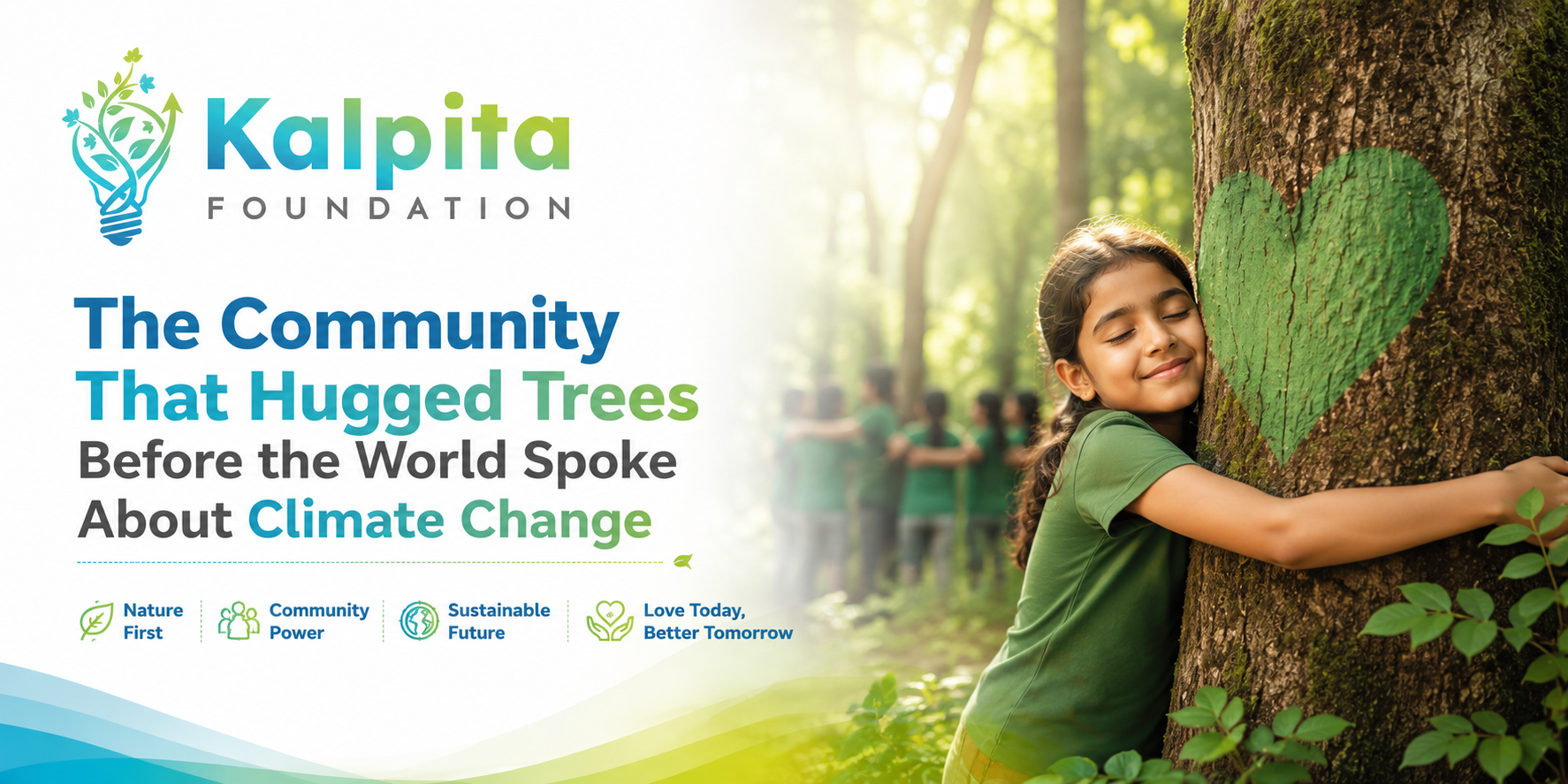
About the The Community That Hugged Trees Before the World Spoke About Climate Change
Imagine standing in a desert village over 290 years ago.
The sun is harsh. Water is precious. Trees are scarce.
Suddenly, royal soldiers arrive with an order.
They have come to cut down hundreds of trees to supply wood for the king's construction project.
Most people would have stepped aside.
Most people would have accepted that they could do nothing.
But one woman chose differently.
She walked up to a tree, wrapped her arms around it, and said that the tree would only be cut after her life was taken.
Her name was Amrita Devi.
She belonged to the Bishnoi community of Rajasthan.
What followed became one of the most remarkable stories of environmental leadership in human history.
More than 360 Bishnoi men, women, and children sacrificed their lives while protecting trees in what is now known as the Khejarli movement.
This happened decades before the world began discussing climate change.
Long before environmental science became a subject in schools.
Long before sustainability became a global conversation.
The Bishnois understood something that modern society is only beginning to fully appreciate:
Humans thrive when they live in harmony with nature.
Learning Without Classrooms
When we think about education, we often imagine classrooms, textbooks, and examinations.
But some of life's most valuable lessons are learned elsewhere.
The Bishnoi community did not learn environmental responsibility through a chapter in a book.
They learned it through everyday living.
Children grew up watching adults protect wildlife.
They learned compassion by feeding animals.
They learned responsibility by conserving natural resources.
They learned leadership by observing people who stood for their values.
Education was not a separate activity.
It was woven into daily life.
This reminds us of an important truth:
Learning happens everywhere.
It happens in forests, villages, camps, conversations, experiences, and communities.
This philosophy forms the foundation of experiential learning and Outdoor Learning programs, where children learn through participation rather than memorisation.
Curiosity Creates Understanding
Have you ever noticed how children naturally ask questions about nature?
Why do birds migrate?
How do trees survive in deserts?
Why do some animals live only in certain places?
Curiosity is often the beginning of meaningful learning.
The Bishnoi community developed a deep understanding of their environment because they observed it closely.
Observation led to awareness.
Awareness led to responsibility.
Responsibility led to action.
Today, this same process remains essential for developing future-ready learners.
Children who are encouraged to ask questions, explore their surroundings, and investigate real-world challenges often develop stronger critical thinking and problem-solving abilities.
This is why Curiosity Expeditions and discovery-based learning experiences are becoming increasingly important in modern education.
Leadership Is Not About Position
When people hear the word leadership, they often imagine CEOs, politicians, or public speakers.
But the story of Khejarli teaches a different lesson.
Leadership is not about authority.
Leadership is about action.
Amrita Devi did not hold a powerful position.
She simply chose to stand up for what she believed was right.
True leadership begins when individuals act according to their values, even when doing so is difficult.
Children develop this kind of leadership not through lectures but through experiences that build confidence, responsibility, empathy, and resilience.
Whether through Outdoor Leadership Programs, collaborative projects, community initiatives, or experiential challenges, young people learn leadership by practising it.
Creativity Is More Than Art
The Bishnoi community also teaches us a broader understanding of creativity.
Creativity is not limited to painting, music, or dance.
Creativity involves finding sustainable ways to coexist with the environment.
It involves solving problems thoughtfully.
It involves imagining better possibilities for the future.
In today's rapidly changing world, creativity has become one of the most valuable Future Skills.
Children who learn to think creatively become better innovators, entrepreneurs, scientists, educators, and changemakers.
Programs such as Kala Vriksha encourage children to explore this creative mindset by connecting imagination with real-world understanding.
Because innovation begins with observation.
And observation begins with curiosity.
Discovering Strengths Beyond Academics
The story of the Bishnoi community also reminds us that intelligence appears in many forms.
Some people excel in mathematics.
Others in communication.
Some in leadership.
Others in environmental stewardship, empathy, creativity, or problem-solving.
Unfortunately, traditional academic systems do not always capture these strengths.
This is why identifying a child's unique abilities is so important.
Through tools such as Psychometric Assessments and personalised Career Counselling, students can better understand their interests, strengths, and future possibilities.
When children discover who they are, they become more confident in deciding who they want to become.
The Future Needs More Than Knowledge
The challenges of the future cannot be solved by information alone.
They require empathy.
Creativity.
Leadership.
Adaptability.
Environmental awareness.
Critical thinking.
The Bishnoi community demonstrated all these qualities centuries ago.
Their story reminds us that education is not merely about acquiring knowledge.
It is about developing wisdom.
At Kalpita Foundation, we believe that every child deserves opportunities to explore, question, create, lead, and discover their potential.
Because the future does not simply belong to those who know the most.
It belongs to those who understand, adapt, and care.
And perhaps the greatest lesson from the Bishnoi community is this:
The strongest roots are not always visible.
Just like a tree, every child carries immense potential beneath the surface.
Sometimes all they need is the right environment to grow.